So I told my husband that I wanted to learn how to play the ‘mbira’ to which his response was “good luck on finding a person to teach you that.” I was saddened by this response because it hit me that a lot of African knowledge is being lost and slowly sinking into oblivion.
Africa is well known to be rooted in oral cultures and traditions; knowledge has been passed down through storytelling. The downside to this though is that a lot of knowledge has been lost through the generations because it has not been documented and there has been a shift to more Eurocentric ways of knowing that replaced African traditions.
Since ancient times, storytelling in the African culture has been a way of passing on traditions, codes of conduct, maintaining social order, transmitting thoughts, beliefs, and feelings. Africans utilized various forms of art, myths and ceremonies to pass down knowledge. The tradition of African storytelling is one of the most ancient in African culture.
Words have great power; they help reserve the knowledge, wisdom, and techniques which are part of a society – this brings many questions to mind; if this is so what then is the role of storytelling in child development? The fact that we are now more exposed to stories of other cultures through story books and other digital media – what are the implications on development? There is power in stories that invoke more than just feelings in the listener’s mind. There is the issue of identification – children are more inclined to identify with the characters in stories they are exposed to.
Storytelling was/is one of the most common aspect in most if not all African communities; I deliberately put a ‘was’ as I have noticed that storytelling the African way is no longer that common or employed the way it used to in the generations before. Storytelling has gone more Euro-centric and it is just seen as a tool in teaching literacy in children yet it’s more powerful than that.
There isn’t much in the literature/research on African storytelling and child development. In this article
I’ll look at the importance of storytelling in child development from an African perspective.
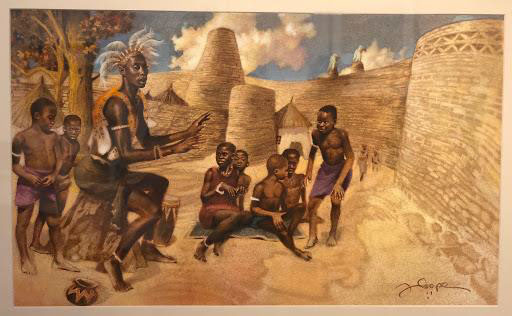
Before we continue let us just distinguish between storytelling and reading. What is storytelling? The American based National Storytelling Network (NSN) defines the term as follows: “Storytelling is the interactive art of using words and actions to reveal the elements and images of a story while encouraging the listener’s imagination.” It should be noted that storytelling is totally different from picture-book reading since storytelling is performed without the use of any printed materials, usually with frequent eye contact between the performer and the listener. African stories are normally accompanied with music, singing, drumming, percussion instruments, clapping, and dancing. The songs are utilized to highlight the expression of the characters and to keep the listener entertainment.
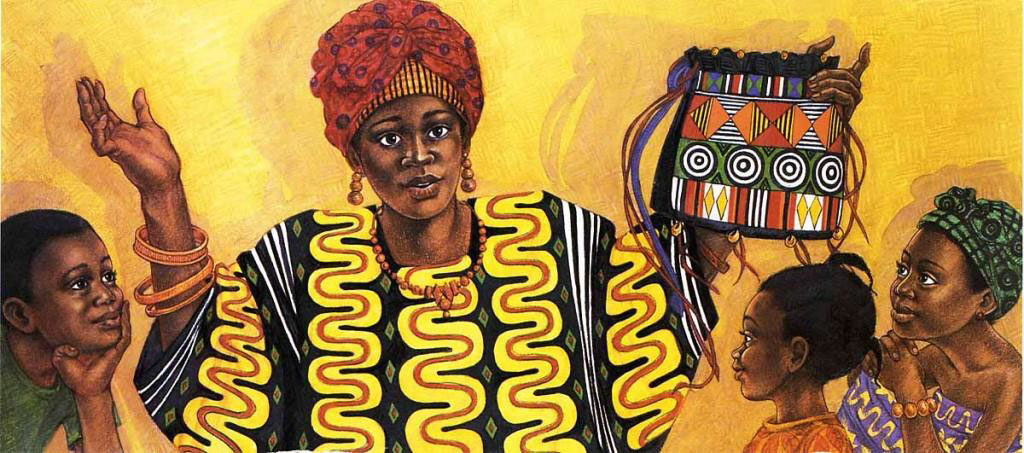
What is unique about storytelling in Africa? Storytelling is essentially a communal participatory experience (shared experiences) and a medium of passing down and preserving knowledge.
The importance of storytelling
- We get to discover who we are through stories meaning our identities are formed as our history is shared to us at different stages of our lives. Stories define us (identity), shape us (teach moral and behavioral rules of society), control us (taboos and religious beliefs), and make us (traditions). Not every human culture in the world is literate, but every single culture tells stories.
- Children are very inquisitive by nature, so stories feed their curiosity. Stories are magical, they have the power to create other worlds and through mental imagery they make the simple things seem incredible. African tales are made up of animal kingdoms, mystical beings, traditional and religious ceremonies, Africa before colonialism and kings and kingdoms etc.
- Storytelling helps children to develop creative imagination – In its most basic form, storytelling is a process where a person (the storyteller), using vocalization, narrative structure, and mental
- imagery communicates with the audience who also use mental imagery and in turn gives feedback to the story teller primarily through body language, facial expression and sometimes have to answer back in an ongoing communication cycle. Storytelling is co-creative and interactive. It is one of the most powerful forms of art/communication known to humans and this explains why it possesses such great potential as a teaching-learning tool.
- It has also been linked to crystallized intelligence and fluid intelligence. Crystallized intelligence refers to the ability to utilize skills and knowledge acquired via prior learning; it involves the recalling of pre-existing information as well as skills. Fluid intelligence on the other hand refers to the capacity to think speedily and reason flexibly in order to solve new problems without relying on past experience and accumulated knowledge.
- If you want to teach something to a child easily, do it through storytelling; it is the oldest form of teaching. It has been used not only in Africa but by communities across the globe, giving children the answers to the biggest questions about existence, creation, life, and the afterlife.
- Story telling was/is not the role of the core family only in the African context, it involves the extended family and the community which brings a sense of belonging and creates strong bonds from the shared experiences.
- Storytelling helps build resilience in children – in the African context our struggles, triumphs, conquest etc. are narrated to the next generation through stories, by virtue of sharing in the stories you become part of those experiences. Through stories children are taught that it is possible to survive adversities.
- Storytelling helps children to develop metacognition – Metacognition can be defined as knowledge about one’s knowledge, processes and cognitive and affective states, and the ability to consciously and deliberately monitor and regulate these processes. Most learning in schools focuses on rote learning and memorizing (mostly to recall when needed) without deep processing (metacognition); storytelling helps children to make sense of knowledge presented to them in a way that is both creative and progressive.
- It improves listening skills in children that will help them across a variety of setups including academics.
- Storytelling improves the memory capacity of a child which assists them in school immensely and future learning. African communities being heavily depended on oral tradition, recalling and retelling tales were/is an integral part that ensures knowledge was/is preserved.
- Music is used in story telling creating an opportunity to teach songs and playing instruments.
- They teach children to be in tune with their feelings like empathy. From a very young age we are naturally oriented towards others and stories help us to connect emotionally with them. Africans are known as a collective or communal people, it is in our stories that we cement our bonds.
- Language development – children pay attention to what we say and their language is a reflection of the stories we share with them. There is a lot of research on the positive effects of reading to young children and how that contributes to language development and literacy; simple storytelling does exactly the same. Storytelling brings language learning alive and creates a participatory and immersive experience. African tales consists of proverbs, rhythm, rhymes that adds to a child’s language proficiency.
- The spoken word or language is so powerful and is seen in the political power of language in propaganda and linguistic stereotyping. Children are exposed to different stories now through
- digital media platforms and those discourses have a strong influence on their language, behavior, self-perception, perception of others and the world. Storytelling gives the storyteller the power to control the narrative.
- It improves communication skills –storytelling is interactive and captivating thereby increasing their willingness to express themselves and communicate their thoughts and feelings.
- They learn to be more patient and understanding of others and appreciates the fact that others can interpret things differently.
- Storytelling gives children the opportunity to learn new ideas and information without even realizing it; they learn valuable life lessons through hearing an engaging and exciting story.
- It is generally agreed that stories are a powerful structure for organizing and transmitting information, and for creating meaning in our lives and environments.
If you want your children to be intelligent, tell them stories. If you want them to be brilliant, tell them more stories”. – Albert Einstein
Talent Adamson
Behaviour Therapist
BA (Health and Social Services) Applied Psychology, BA Hon (HSS) Psychological Counselling – (UNISA)